
Figure 1. Example of a pie chart
(this site uses frames, if you do not see the weblecture and definitions frames on the right you can click here, if you don't see a menu on the left and want to go to the home page click here)
As the name implies a circle diagram is a circle divided into slices (sometimes called wedges or sections), each representing a category as in the example shown in Figure 1.
Figure 1. Example of a pie chart
Although various definitions exist, they all describe the same shape.
| Pie chart “a graphic display in which a circle is cut into wedges with the area of thee each wedge being proportional tot he percentage of cases in the category represented by that wedge” (Zedeck, 2014, p. 260) |
The circle diagram is quite popular and often used, but actually has a few disadvantages:
An example of a 'bad' circle diagram was created by a program called ‘The Archivist’ and used in an article online (Perez, 2009) is shown in Figure 2.

Figure 2. Example of a pie chart with too many slices. Reprinted from 10 Ways to Archive Your Tweets, by S. Perez, 2009, Retrieved from http://readwrite.com/2009/08/10/10_ways_to_archive_your_tweets.
There are clearly too many categories and the few biggest slices are difficult to tell which is bigger. A possible solution in this case could have been to group the smallest categories into one category 'Other' and then still use a bar-chart instead.
Another example of a 'bad' circle diagram comes from The Economist (Kyd, 2012) shown in Figure 3.
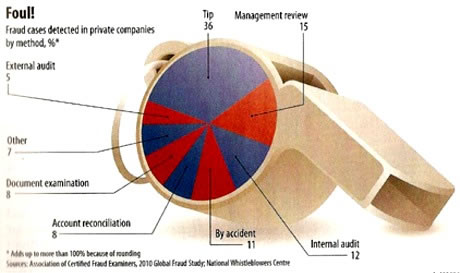
Figure 3. Example of pie chart with rel. freq. too close to each other. Reprinted from Good Examples of Bad Charts: Chart Junk from a Surprising Source, by C. Kyd, 2012, Retrieved from http://exceluser.com/blog/1133/good-examples-of-bad-charts-chart-junk-from-a-surprising-source.html
It is very difficult to see the differences. It is not until you look at the numbers that you can tell which slices are bigger or smaller (with a few exceptions). A bar-chart would have been preferred.
A third example comes from fox-news, shown in Figure 4.
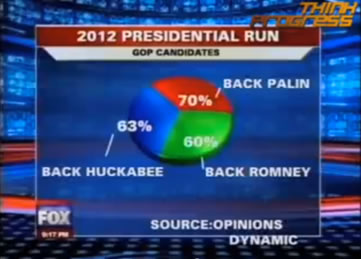
Figure 4. Example of a pie chart with percentages not adding up to 100.
This seems pretty odd that the percentages do not add up to 100%. This is probably because people could choose multiple options. The size of the slices is then somewhat irrelevant. A bar-chart would have been preferred here.
In newspapers and magazines a 3D effect is added as well as for example in Figure 5.

Figure 5. Example of distortion by 3D effect in a Pie chart
Note that Group B appears to be very big, then Group C, then Group A and Group D seems to be the smallest. However each group was actually equal in size, but because of the 3D effect the slice on the foreground appears larger than those in the background. It is therefore recommended to avoid using these kind of 3D effects.
There are many variations to the circle diagram. Some only add a visual effect (moving one or more slices out of the centre a.k.a. exploded), and some more complex variations (doughnut charts, spie charts, etc.).
Drawing a pie-chart by hand is becoming a bit of a lost art, since most pie-charts are now generated by software such as MS Excel or SPSS. If you want to know how to manually draw a pie-chart you can follow the instructions in this PDF, or watch the second weblecture on the right.
The earliest found circle diagram is found on the inlay of a book by William Playfair (1801) shown in Figure 6.
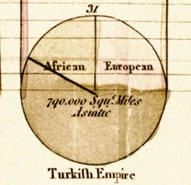
Figure 6. Earliest found pie chart. Reprinted from The statistical breviary: shewing the resources of every state and kingdom (p. inlay), by W. Playfair, 1801, London: T. Bensley
The name 'pie chart' might come from a misspelling of the word Pi. Pi is often associated with a circle. It might also simply come from the resemblances with a pie (as in apple-pie). However Srivastava & Rego (2011) put forward another belief that it is named after a royal French cook Pie, who served dishes in a pie-chart shape.